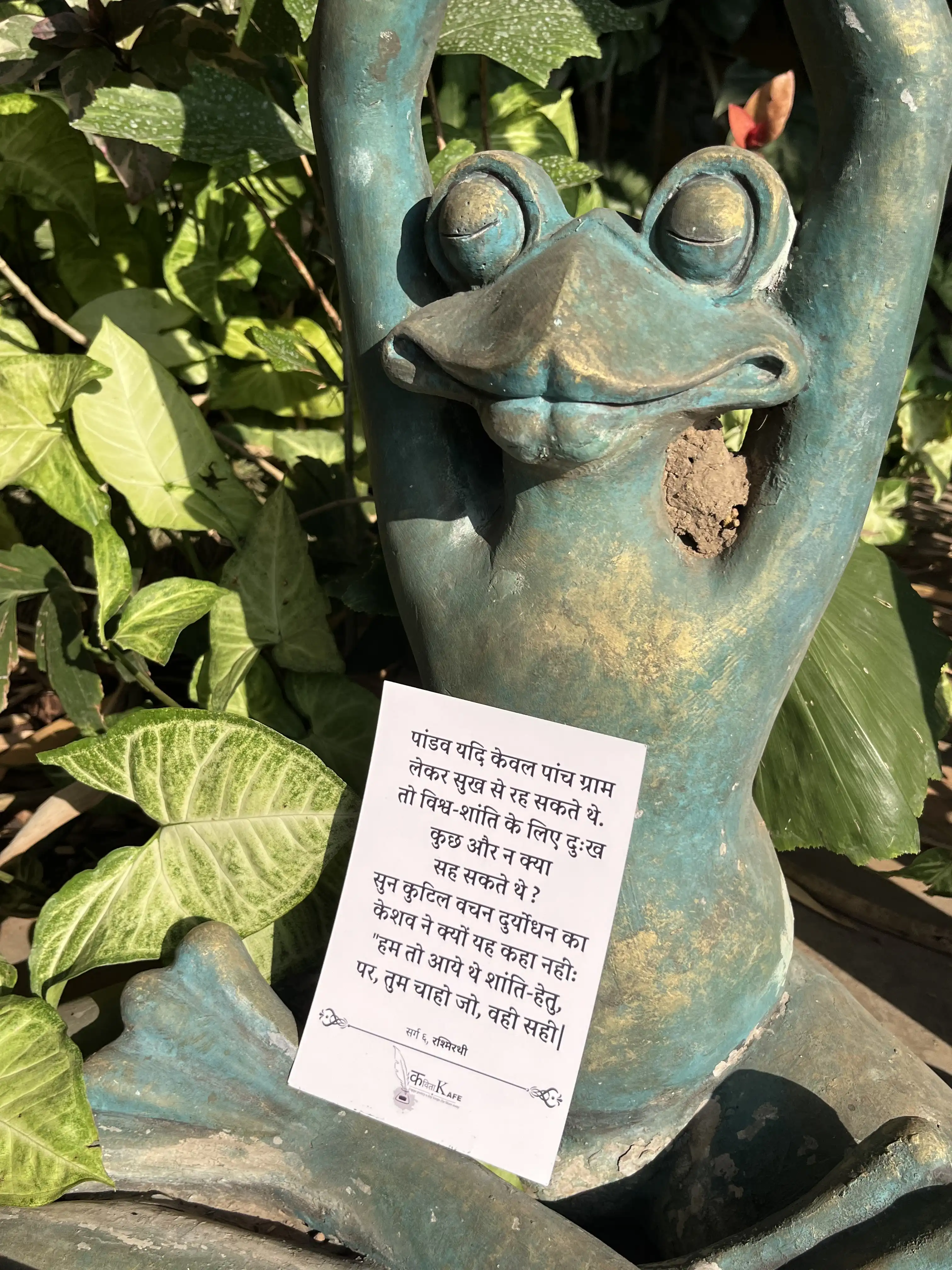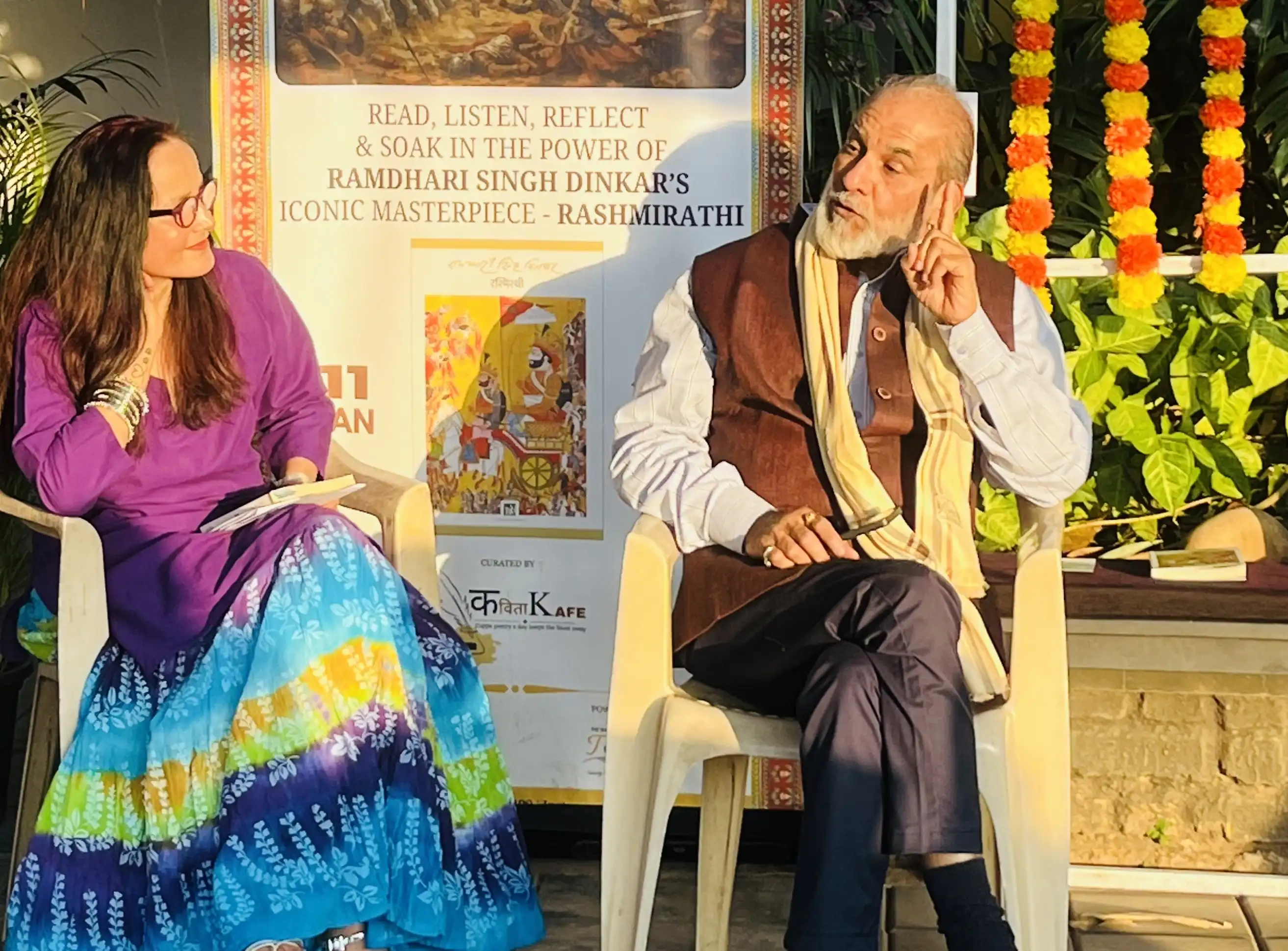
Around 4.30 pm on a leisurely Sunday, a group of about 25 people—ranging in age from 12 to 77—gathered at Monalisa Kalagram in Koregaon Park to discuss a book written nearly 75 years ago. Based on the Mahabharata, an epic composed over 5,000 years ago, Rashmirathi by Rashtrakavi Ramdhari Singh Dinkar brought together this diverse audience at a time when reading habits, especially of classical Hindi literature, are steadily declining.
The epic poem revisits the life of Karna, one of the most complex characters of the Mahabharata, and explores themes of honour, loyalty, social injustice, inner resolve, friendship, and moral conflict. Organised by the city-based poetry group KavitaKAFE on January 11, the discussion sparked probing questions: Was Karna wronged by society? Could he have walked away from Duryodhana? Is dignity more important than righteousness? Does Rashmirathi portray Krishna as compassionate or calculated in his dealings with Karna? Participants also reflected on qualities of Karna that they recognised in themselves or aspired to imbibe.
The evening began with a brief flute recital by city-based artist Avikal, setting a reflective tone. The special guest for the event was Sunil Deodhar, a Pune-based author, poet, essayist, translator, and broadcaster. He observed that as long as society remains fundamentally unchanged, the events of the Mahabharata will continue to repeat themselves. Just as certain aspects of today’s world are considered right, some were equally right in that era, he noted.
Deodhar also shed light on historical and geographical references from the epic, explaining the significance of Karna being called Angaraj—the king of Anga—and how present-day Bhagalpur corresponds to the ancient Anga region. He further spoke about the five villages the Pandavas asked of Duryodhana as a final attempt to avert war and their present-day equivalents: Indraprastha (Delhi), Swarnaprastha (Sonipat), Panduprastha (Panipat), Vyaghryaprastha (Baghpat), and Tilprastha (Tilpat).
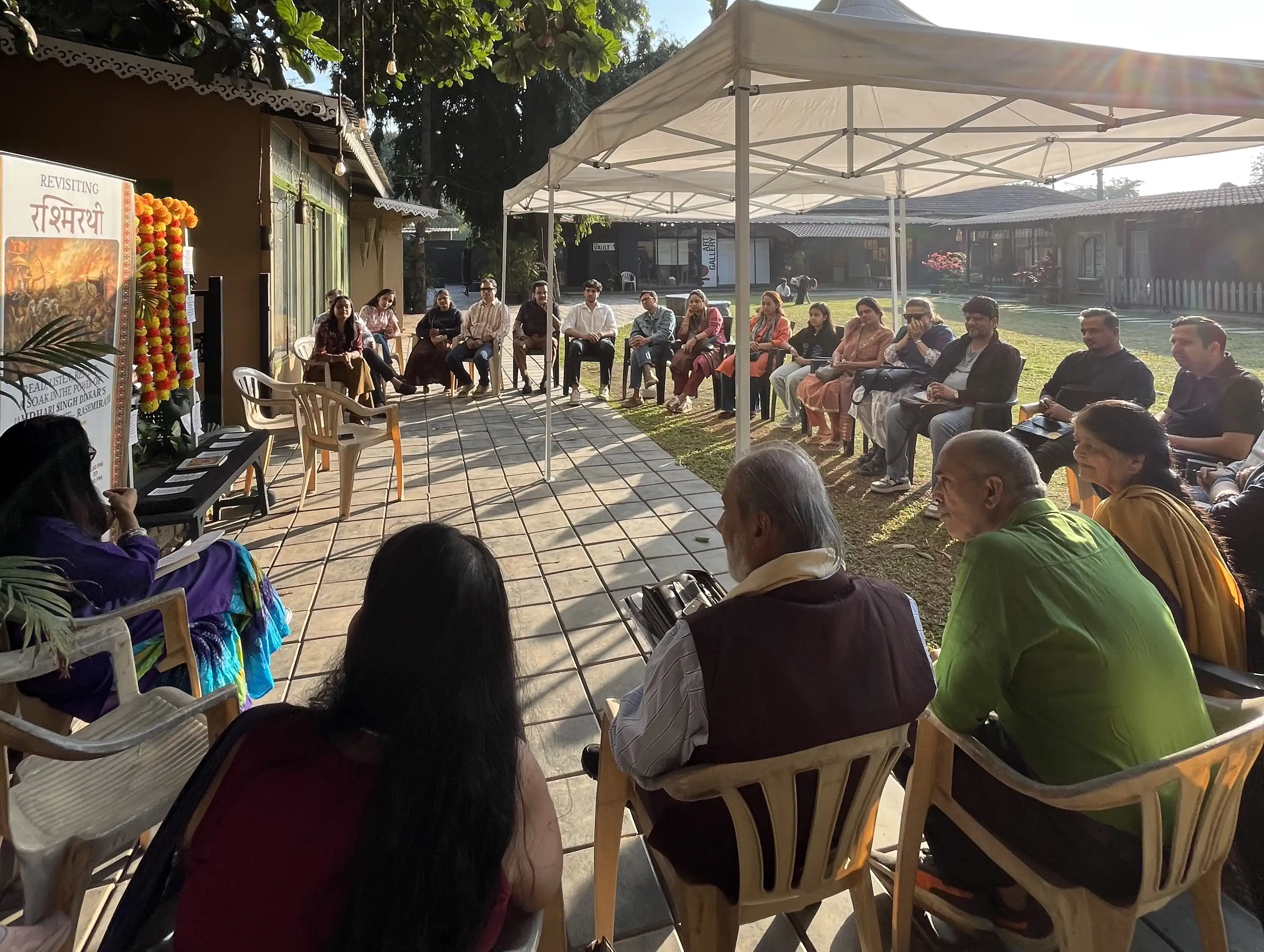
One participant remarked that Rashmirathi remains timeless because it reshaped Karna’s image, offering a perspective that differs significantly from his portrayal in the Mahabharata. While many admired Karna’s virtues—his generosity, loyalty to Duryodhana, sense of duty as a son, ambition, and resilience—others reflected on his flaws. The discussion acknowledged that Karna’s life was shaped as much by his admirable qualities as by his difficult choices, inner conflicts, and moral dilemmas, making him a deeply human character rather than a one-dimensional hero.
According to participant Subash Sangam, Karna is neither a hero nor a villain but one of the many layered figures in the epic. “The characters of the Mahabharata live on through each one of us,” he said, adding that at different points in a single day, people embody Arjuna’s focus, Draupadi’s anguish, and Karna’s unresolved fears rooted in past experiences.
Several participants expressed empathy for Karna, recalling the injustices he faced—Indra seeking his armour and earrings in disguise, Parashurama withdrawing his guidance upon discovering Karna’s perceived social identity, and Kunti abandoning him at birth only to later seek his help. At the same time, many felt that his silence during Draupadi’s disrobing was a moral failing that could not be overlooked.
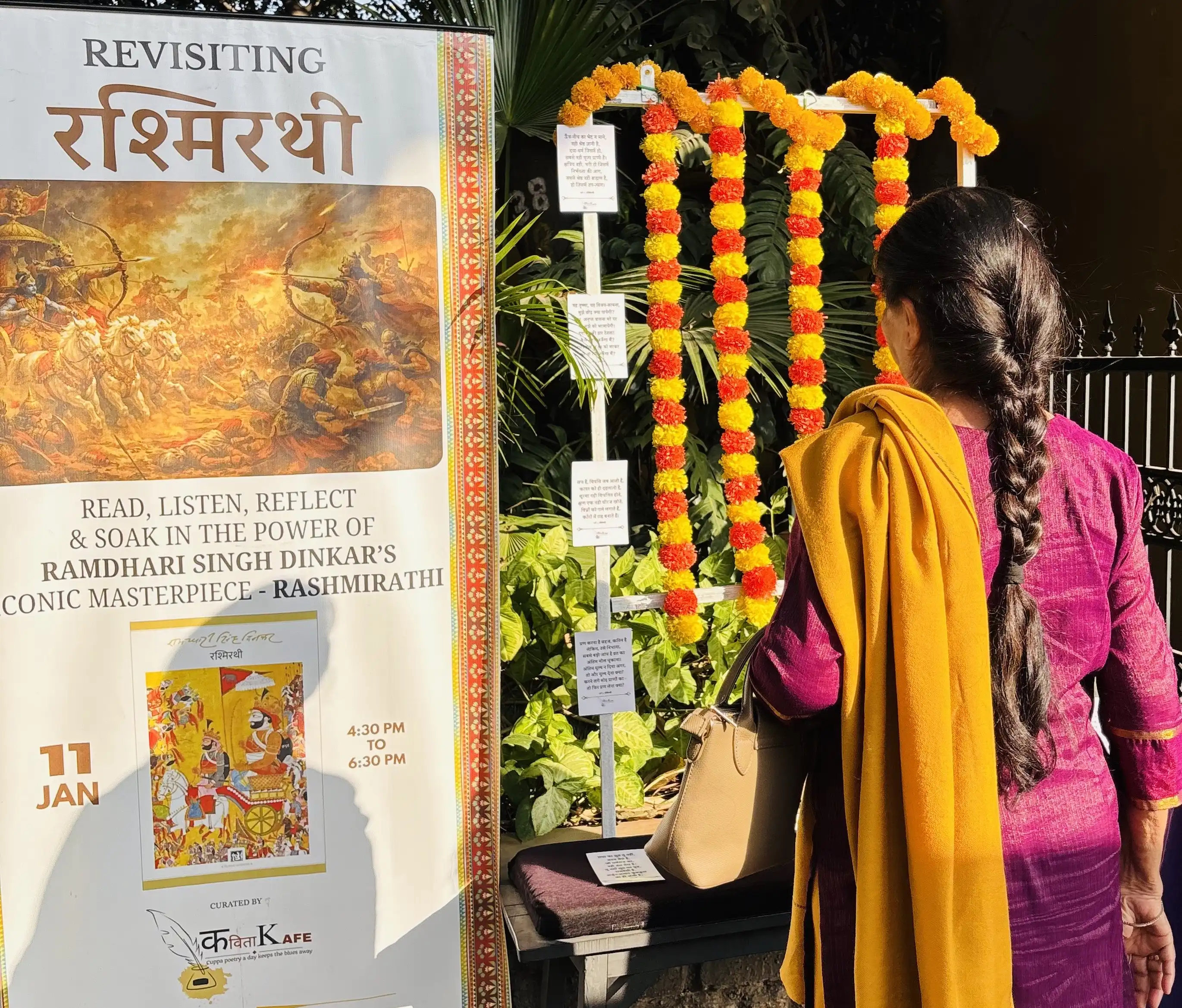
Among the youngest attendees was Anabiyah, a 12-year-old participant whose father is a poet. Encouraged by her parents, she attended as a listener, driven by curiosity to learn more about Rashmirathi and to hear the perspectives of others.
Lisa Pingale, founder of Monalisa Kalagram, said the space encourages art and literature to be lived, questioned, and experienced across generations. When an epic like Rashmirathi brings people of varied ages together to reflect on dignity, choice, and inner conflict, she noted, it reinforces the continued relevance of Hindi literature.
Since its inception, KavitaKAFE has aimed to nurture a genuine interest in reading and writing Hindi literature. “At a time when books are increasingly read on Kindles and lives are dominated by phone screens and reels, the response to a timeless Hindi classic like Rashmirathi was overwhelming and deeply heartening,” said Garima Mishra, founder of KavitaKAFE.