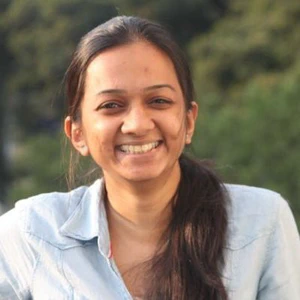
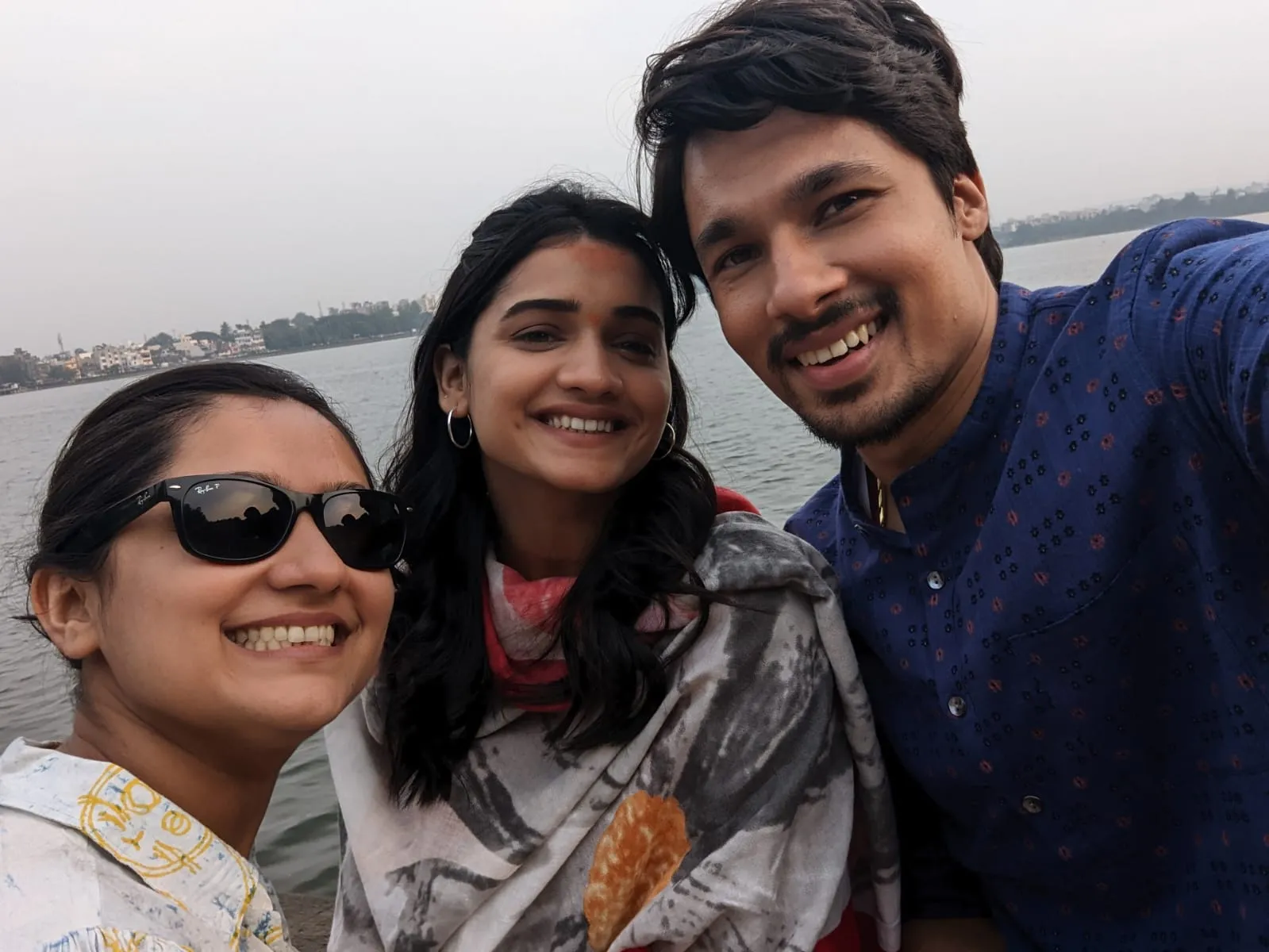
For Kalyani Pandit, writing begins with emotional truth. Whether it’s a fleeting family moment, an overheard conversation, or her own lived experiences, the screenwriter transforms everyday emotions into deeply resonant stories. Fresh off the success of Aga Aai Aho Aai on Zee5, she reflects on her journey, her creative process, and the changing landscape for women writers and female characters.
Excerpts from the interview
Growing up, what first inspired you to write?
Kalyani Pandit: My journey to filmmaking and screenwriting came through design, not through poetry or essay competitions, as one might expect. I was always creatively inclined. During my design graduation in Pune, I realised that my fascination with films as a child wasn’t just about the glamour — it was because I loved telling stories through images.
That curiosity led me to participate in intercollegiate short film competitions, and eventually I decided to study filmmaking formally at Whistling Woods International in Mumbai. I chose screenwriting because, strangely enough, it was the one place where I felt both most empowered and most at ease.
When did you realise writing was going to be your career?
Kalyani Pandit: I studied screenwriting formally at film school, but I truly felt like a writer the first time something I had written was produced and telecast. Screenwriting doesn’t completely sink in until you actually see your words come alive on screen. That was the defining moment for me.
Aga Aai Aho Aai chooses warmth over the usual family-drama conflicts. Did anyone tell you that approach was too idealistic?
Kalyani Pandit: (Laughs) Only after the release. I’ve seen comments and DMs calling it too idealistic. But while writing it, I always knew I was telling the coming-of-age story of a marriage.
I was fortunate to have Varun as the director because he knew exactly how to translate that warmth onto the screen. Hruta, Nirmiti Tai and Renuka ma’am brought their own magic to the story, while Suyog Gore plays the ultimate green-flag husband, beautifully carrying the thematic arc.
You’ve said Aga Aai Aho Aai is rooted in a personal story. Could you tell us about it? Was it difficult to revisit those emotions while writing?
Kalyani Pandit: It all began with a bittersweet moment I witnessed between my kaku and my cousin. The emotional truth of that moment stayed with me, and before I knew it, these characters had started taking shape in my head. It almost felt as though they were telling me their story rather than me writing it.
Beyond that initial spark, I also channelled my own understanding of my relationship with my mother. At its core, the mother and the mother-in-law are really two sides of the same coin. You can’t choose one without acknowledging the other.
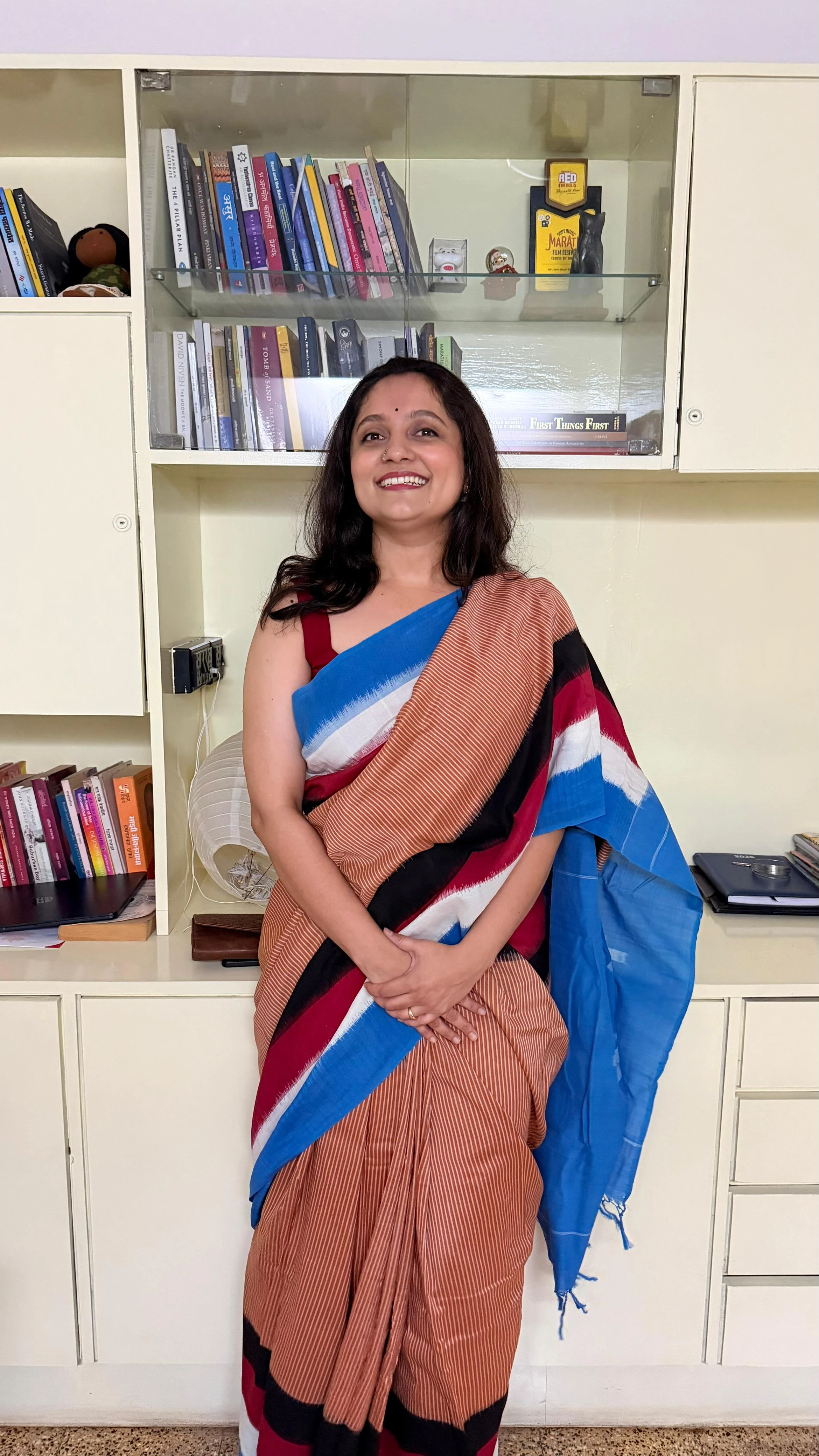 Kalyani Pandit
The show feels deeply Maharashtrian while remaining universally relatable. How did you strike that balance?
Kalyani Pandit: The title itself is deeply rooted in Maharashtrian culture — “Aga Aai” for mother and “Aho Aai” for mother-in-law. We also explore Shreya and Anish’s first year of marriage through Marathi cultural milestones, so the setting feels authentic.
But relationships between mothers and daughters — especially the love-hate dynamic that develops with age — are universal. And the idea of an unusually loving mother-in-law becomes a refreshing surprise because we’re so used to manipulative portrayals. I think that blend of cultural specificity and emotional universality helped the story connect beyond language.
Have you ever turned down a project because it stereotyped its women characters?
Kalyani Pandit: I wish I could say no, but yes, I have. I usually try reasoning with the makers first. Unfortunately, there’s still an audience for those stereotypes, so people are often reluctant to change. When that happens, I’ve had to walk away.
Do you think audiences today are more open to flawed, layered female protagonists than they were a decade ago?
Kalyani Pandit: A decade ago we already had films like Piku, Queen and Sairat, so I don’t think I can make a sweeping generalisation. There have always been audiences that embrace layered women, while others continue to expect idealised versions.
With Aga Aai Aho Aai, we’ve received some fascinating responses to Shreya. Hruta has beautifully captured her nuances, and it’s sparked conversations around the myth of the “perfect” daughter and daughter-in-law.
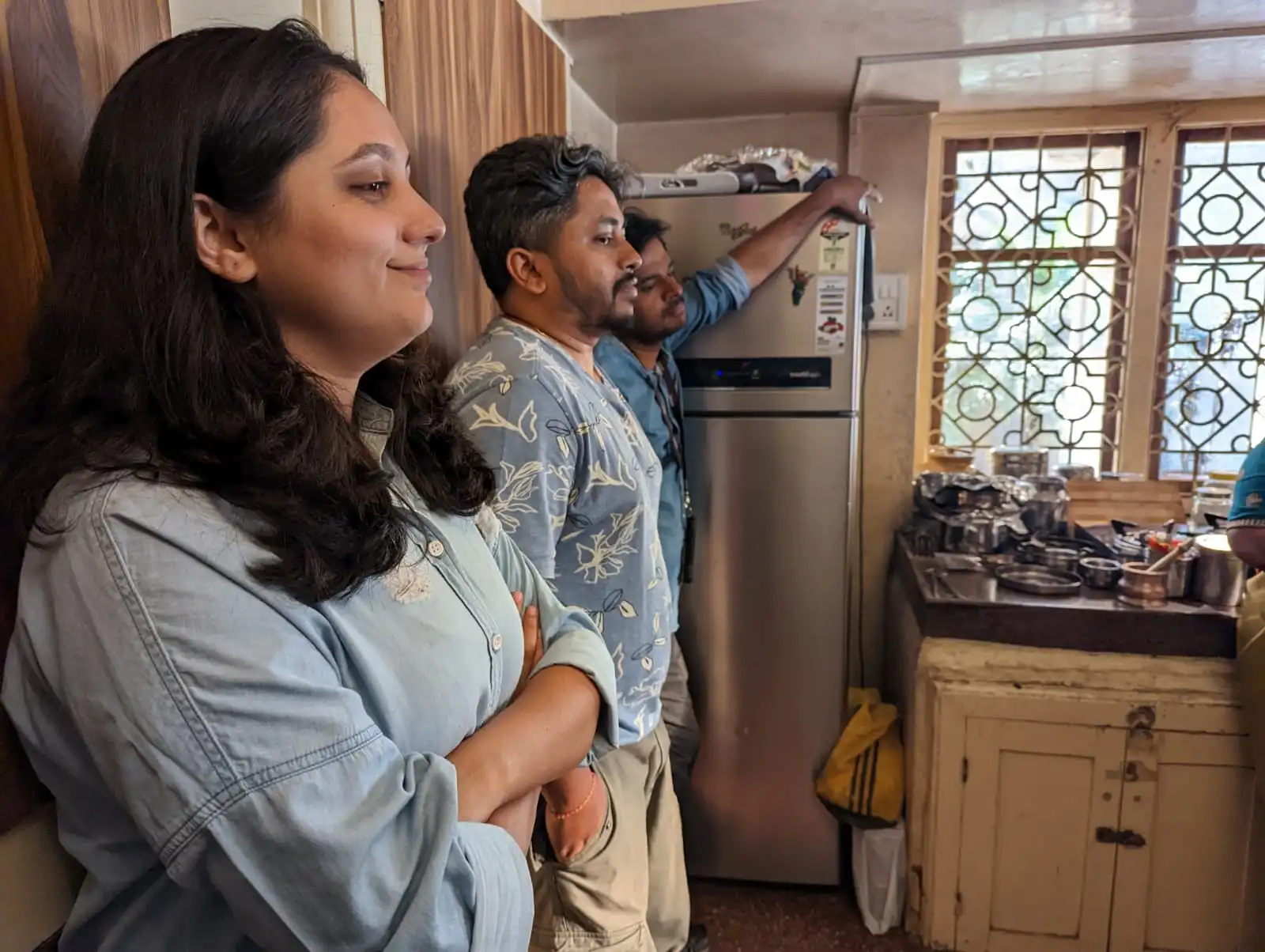 On the sets of Aga Aai Aho Aai
Your dialogues feel natural and lived-in. Do they come from observing real people or instinct as a writer?
Kalyani Pandit: It’s a mix of both. I think I have a running diary in my head — and sometimes on my phone. Whenever I hear an interesting line or witness an unusual conversation, it stays with me until it naturally finds its way into my writing.
That’s the best part of this profession. As poetic as it sounds, writing gives me a cathartic superpower to make sense of life.
What’s harder to write: an explosive confrontation or a quiet emotional scene?
Kalyani Pandit: The hardest thing to write is truth. Whether it’s a confrontation or a quiet moment, it has to feel emotionally believable. Not just logical, but emotionally true — the audience should feel, Yes, this could happen. Yes, someone could actually say this.
Keeping viewers immersed in the emotional landscape of a story is the greatest challenge, and also the most exciting part of writing. I love it.
What, in your view, makes a truly inclusive writers’ room?
Kalyani Pandit: A writers’ room should fairly compensate writers for the work they do, credit everyone appropriately instead of allowing one person to take all the glory, and never be driven by toxicity or manipulation.
It’s not just a workplace. Because writing demands emotional honesty and discussions around human behaviour and socio-political realities, people often end up sharing deeply personal experiences during brainstorming. A writers’ room should feel like a therapy room — a sacred, safe space where everyone can bring their best selves.
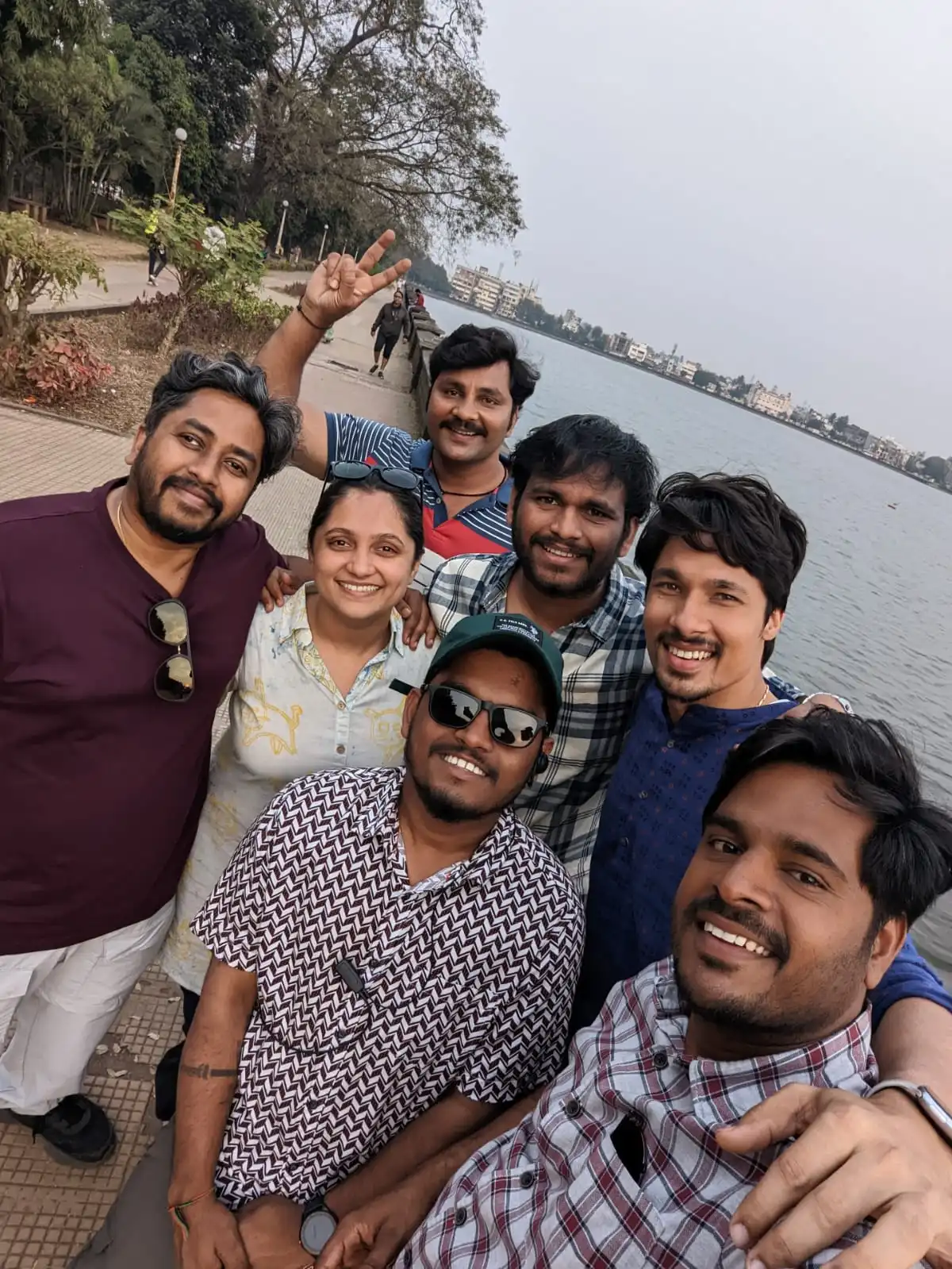 The team of Aga Aai Aho Aai
Was there one script that changed how the industry saw you as a writer?
Kalyani Pandit: I think it’s really about building a body of work and staying resilient. I had to be patient while creating my niche and continuing to evolve.
But if I had to choose one project, it would definitely be Aga Aai Aho Aai. It began in 2019 as just a two-page concept. The fact that veteran Marathi producers Ranjit Gugle and Anish Joag immediately responded to the pitch gave me tremendous confidence.
It was a speculative script that was later greenlit by Jio Studios, thanks to Nikhil Sane, and has now found its audience on ZEE5, thanks to Hema VR and Kalyani Pathare. The entire journey has been my own coming-of-age story as a writer.
If you had to introduce someone to your work with just one project, which would you choose and why?
Kalyani Pandit: I’d choose Aga Aai Aho Aai because it comes directly from my lived experience. It’s closest to who I am as a writer and how I see the world.
Screenwriters often work on commissioned projects where the idea comes from someone else. That’s part of the profession. But speculative scripts like this are special because they allow us to tell an unfiltered story that’s entirely our own.
If your life were adapted into a screenplay, how would you describe yourself as the protagonist?
Kalyani Pandit: (Laughs) Oh my God! Ambitious, resilient… and a cat mama! And I sincerely hope whoever writes that screenplay is well paid and properly credited.