Creative writing is often assumed to be inseparable from literacy—built on reading, writing, grammar, and vocabulary. But a recent workshop in Bansa, a village in Uttar Pradesh, is quietly challenging that belief, showing that creativity can thrive even without formal education.
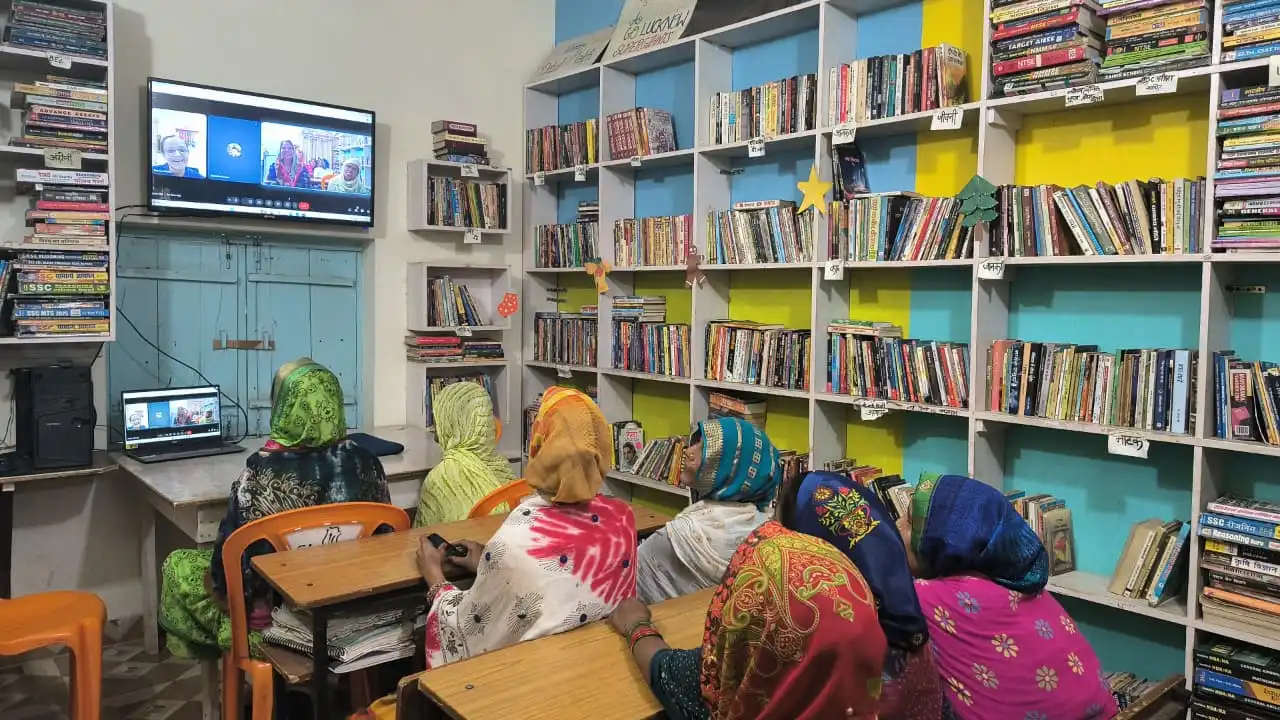
Organized by the Hyderabad-based Lampshade Writers in collaboration with Bansa Library, the initiative brought together rural women for a series of creative expression sessions. These were conducted remotely by Pune-based facilitator Garima Mishra, founder of KavitaKAFE and the Healing Verses initiative. The participants—women aged 20 to 45—were homemakers, agricultural workers, and daily wage earners. Most had never attended school and had little exposure to structured learning.
As Nivedita from Lampshade Writers reflects, “When Jatin from Bansa gave us a virtual tour of the Bansa Library and shared that women there had begun exploring picture books, it made me wonder if we could do something more—something that would encourage them to express themselves. Garima ji felt like the right person to help make that happen. Having Patrichia from Lampshade as a constant companion throughout the program also made me realize something deeply meaningful—that when women come together, there is a certain magic in sisterhood.”
What made the workshop unique was its approach. Instead of treating creative writing as a technical skill, it reimagined it as an act of expression—independent of the ability to read or write.
“When I started, I wondered if a writing workshop would even make sense in this context. But very quickly, it became clear that the real question was not about writing—it was about whether people have the space to express at all,” said Mishra.
With this shift, the workshop was built on four principles: speaking before writing, removing judgement, using poetry as expression rather than performance, and reinforcing confidence through repetition. The focus was not on teaching writing, but on enabling voices.
The first session began with a reassurance—it was neither a class nor an exam, but simply a space to speak. Participants introduced themselves and shared glimpses of their daily lives. A simple question, “where would they take a visitor in their village?” sparked a sense of empowerment, which well reflected on their faces. The women spoke about temples, a canal, a park, and the local library, each detail reflecting a deep sense of belonging.
A prompt—“Today is special for me because…”—brought out honest reflections. For many, the chance to do something new beyond their routine was reason enough to feel special. They were excited to express themselves without fear of being judged.
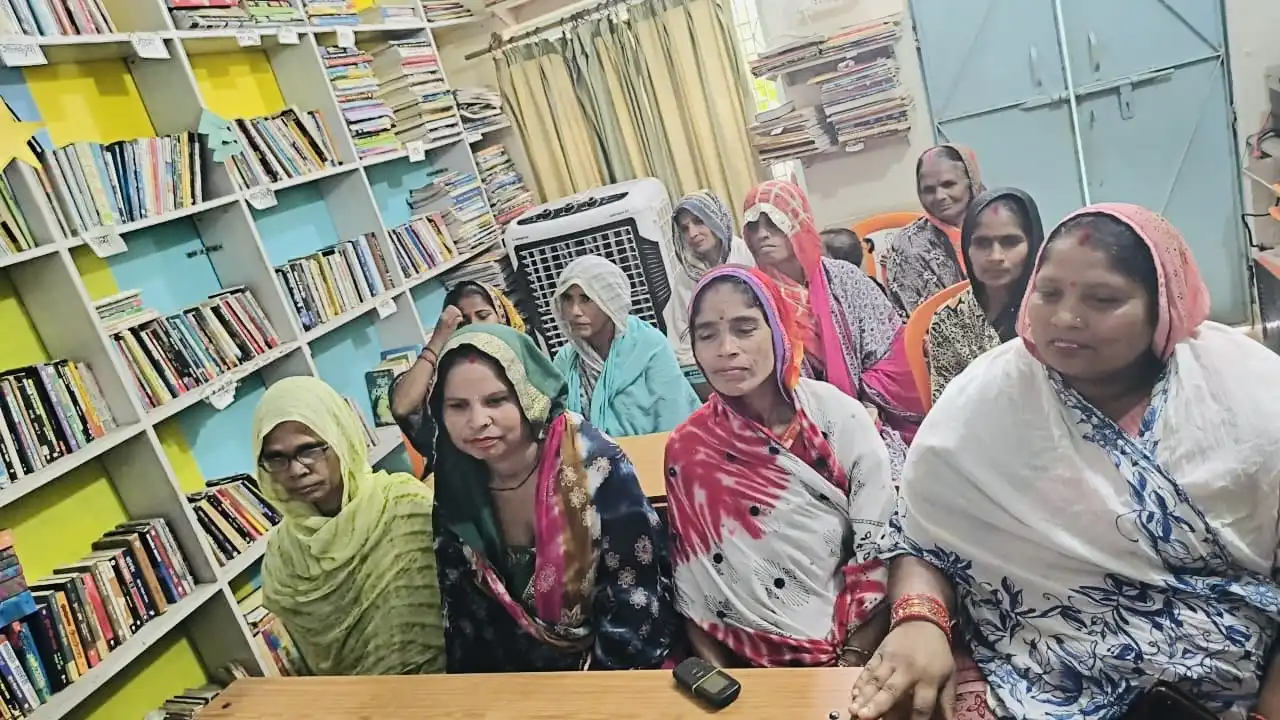
By the second session, the shift was visible. Participants returned with observations: the scent of roses, a jujube tree, the act of plucking curry leaves. Everyday moments, often overlooked, were now being noticed and articulated.
The session then moved from observation to awareness. With their eyes closed, the women listened closely to sounds around them—children talking, vehicles passing, doors creaking. It encouraged them to experience their surroundings more deeply.
A prompt on happiness revealed how closely their joy was tied to family and stability—a good harvest, children’s progress, financial security, or small personal gifts. One participant’s remark stood out: “No one has ever asked us what makes us happy.”
By the third session, the space had grown more open. Conversations turned to emotions—joy, stress, jealousy, pride—expressed through personal experiences. The prompt “If my heart could speak…” led to reflections that were both intimate and revealing: desires to travel, to shop freely, to see children settled, or simply to feel healthier.
“These were not just answers to an exercise. They were thoughts and feelings that had perhaps never found an outlet before,” Mishra noted.
The final session brought a creative culmination. Participants were asked to build stories around a fictional character named Phoolwati. What emerged were narratives blending imagination with lived reality.
One participant imagined Phoolwati as a determined girl devoted to her studies, dreaming of a better future. Another saw her as a woman balancing responsibilities while finding joy in small moments. Yet another imagined her as an ambitious young woman aspiring to become a doctor. The village librarian envisioned a character who dreamt not only for herself but for the development of her entire community.
Despite the freedom to imagine, every story remained rooted in Bansa. The characters travelled far in aspiration but stayed grounded in familiar realities—revealing how deeply personal these narratives were.
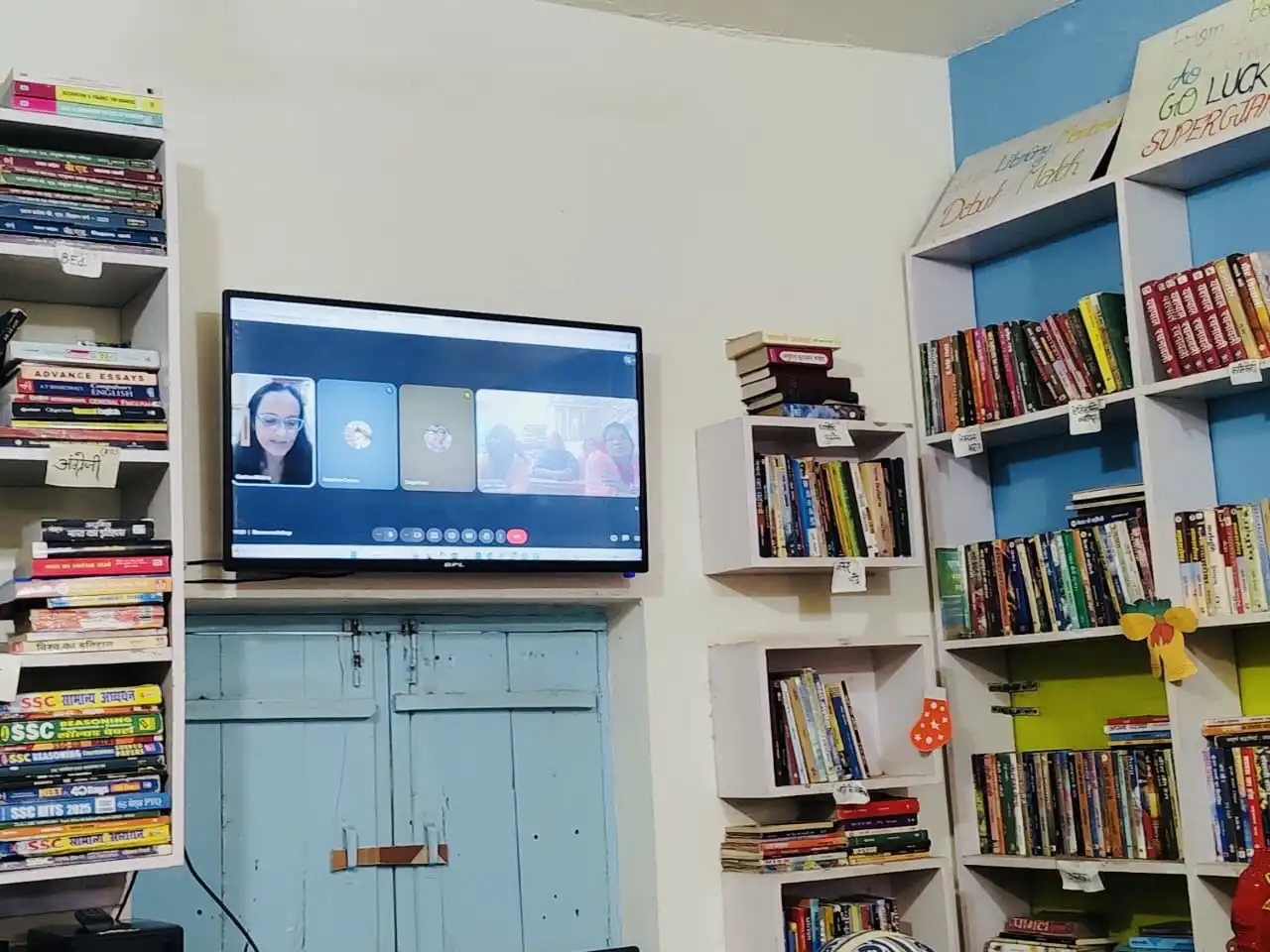
“These stories may have been simple in form, but they carried profound meaning. They reflected aspirations, possibilities, and alternate versions of lives that could have been,” said Mishra.
The workshop concluded with a gesture that captured its spirit. As a farewell, the women sang a folk song and a bhajan in their local dialect.
The experience offered a powerful takeaway: creativity does not belong only to those who are literate. It exists in observation, memory, emotion, and lived experience. What it requires is not instruction alone, but a space where expression is encouraged without fear.
In Bansa, that space was created.