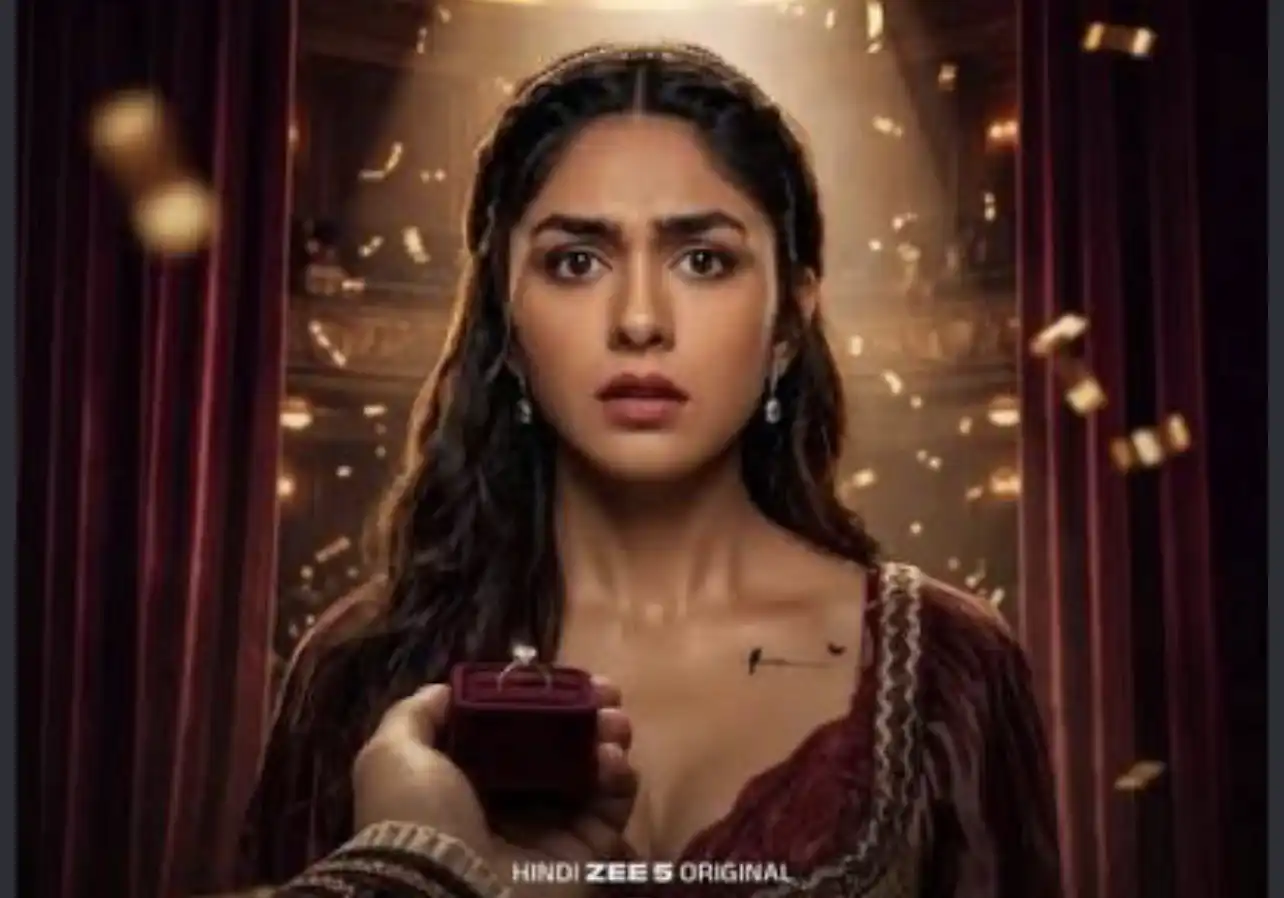
Pooja Meri Jaan was shot way back in 2022, but the storyline and concept still feel remarkably relevant and, importantly, fresh. The film takes the eternal question of why some men cannot handle rejection and explores it in a very different way. It is not jarring or constantly in your face, but at the same time, it is far from superficial.
Mrunal Thakur as Pooja is phenomenal. The change in her demeanour, body language and overall personality through the film is impressive. You can see that she has put in a lot of effort to make the character feel real. There are several layers to Pooja, and the way those are revealed is one of the film’s strengths. Mrunal does complete justice to the role.
When you are first introduced to Vikram Chauhan, who plays Aniket, you want to give him a hug and just be there for him. But as the film progressed you realise that looks can be deceptive, and how! Vikram does a great job as Aniket, his character graph is so revolting that you want to just shake him back to reality!
Vijay Raaz plays a lawyer, a role very unlike his recent ones. I am so happy he did this role. He has brilliant comic timing and is hilarious, but his ‘thehraav’ in this role is what really stands out. There is a restraint to his performance that works beautifully. His strong screen presence and acting are impressive.
But you cannot deny the tough fight Huma Qureshi puts up. As an actor, I think Huma is so underrated. She is a very good performer. Give her any role and she makes it her own. She is particularly good as Sana, the lawyer and friend to Pooja. Her character gives the story another dimension, and Huma brings the right mix of strength and vulnerability to her.
Mrunal and Huma together make the film stronger. Their equation gives the story an emotional grounding and ensures that the film does not become solely about the central mystery.
Sunita Rajwar plays a cop, and it is refreshing to see a woman play a police officer without the character being larger-than-life or melodramatic. She is a normal person who chooses to do things at her own pace. I would have loved to see more of her.
Navjot Gulati’s direction shows conviction, and he does justice to the subject. The film deals with a sensitive issue without making everything excessively dramatic. Gulati and Kanishka Singh Deo are credited as writers, with Niren Bhatt also credited on the screenplay and dialogues.
I will keep saying this: having a woman involved in writing a script can make a huge difference, especially when dealing with sensitive subjects like this. The perspective matters, particularly when the story is examining issues around women, rejection, perception and the consequences of how a woman’s choices are interpreted.
Where the film could have gone further is in its depiction of Aniket’s perspective. It would have been interesting to have more episodes or scenes showing his version of his meetings and time spent with Pooja and vice versa.
For example, the film shows two versions of their first meeting — one from his perspective and another showing what actually happened. More scenes like these could have really highlighted the problem with Aniket’s perception and the way he constructs his own version of events.
That, for me, is one of the most interesting aspects of Pooja Meri Jaan. It is not simply about what happened; it is also about how differently the same events can be perceived, remembered and interpreted.
The film may have been made some years ago, but its central questions have not dated. If anything, the passage of time makes the subject feel just as relevant today.